We use cookies on this site to enhance your experience.
By selecting “Accept” and continuing to use this website, you consent to the use of cookies.
The CRSP is devoted to discussing research practices and experiences, sharing research findings, and cultivating relationships with multiple, diverse audiences. We host a range of events such as presentations, round tables, workshops, and conferences that provide opportunities for the exchange and co-creation of knowledge among presenters and attendees. While some events are directed toward scholarly audiences, others are primarily oriented to those working outside academia.
A core objective at CRSP is to put actionable information and knowledge into the hands of practitioners, policy makers, and advocates for social change. To achieve this, CRSP hosts community-focused research workshops, symposia, and roundtables. For example, CRSP members have hosted events to exchange knowledge with representatives from various social services, non-profit organizations, police services, and members of the local Brantford community.
March 2, 2026
The moment a person is arrested by police is an under-studied interaction. My research addresses this knowledge gap by examining the “dual-perspective” of police-citizen arrest encounters. Drawing on interviews with both detained individuals (n=165) and frontline police officers (n=55) in three cities across three provinces, my work explores how both parties involved in this key, sometimes contentious interaction, make sense of this moment and of their respective counterpart.
In this presentation, I will share findings about arrestee and officer evaluations of the “makers and breakers” of their interactions through accounts of their best and worst experiences. Worst accounts were marked by various forms of escalation, particularly on the part of officers, while best experiences were characterized by instances of “accommodation” (e.g. allowing a cigarette before arrest), or clear displays of compassion. I will also discuss key strategies officers have implemented that “repaired” an interaction that was primed for contention – what I refer to as “turning points.” Both samples reflected on instances that either affirm or deny their shared humanity.
This research deepens our understanding of people’s relationships with law and state authority, particularly from the perspective of those who have the most to lose and most to gain from criminal justice reform.
March 7, 2026
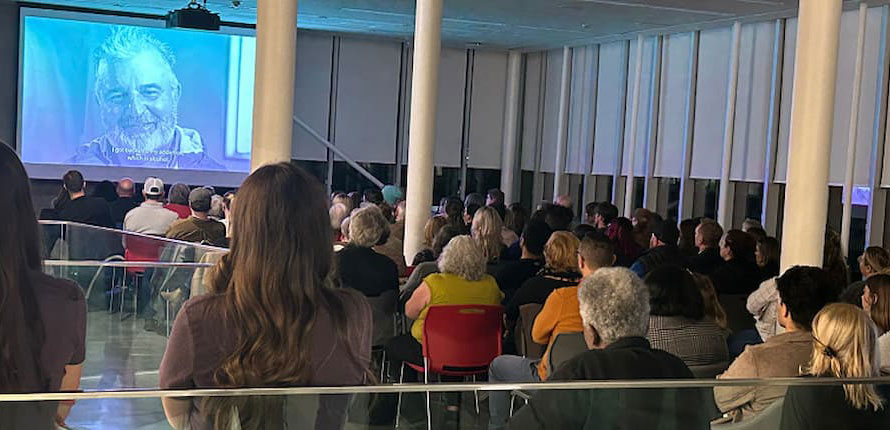
We invited five individuals from diverse backgrounds to participate in a Brokered Dialogue to share their perspectives about homelessness, public space and safety in their community. A brokered dialogue is a film making technique that brokers a series of conversations among people with different perspectives about a complex social issue to foster critical thinking. Using a case study of three mid-size cities in Canada, the film features a conversation among two people with lived experience of homelessness and housing precarity, a service provider, business owner, and a member of law enforcement about the causes and consequences of homelessness, public safety, and ways forward. The documentary provides a greater understanding about homelessness among diverse members of the community with the goal of helping to move towards positive, solutions-focused responses that help build feelings of safety and a sense of belonging for all.
We are inviting community members to join us in a community screening of the documentary followed by an interactive question-and-answer period with experts in the field of homelessness and community belonging.
This documentary screening is funded by the Social Sciences and Humanities Research Council.
March 18, 2024
This lecture will provide critical examination of the history of the field of prevention of violent extremism from a social work perspective and elaborate on the consequences on minority and racialized communities. We will also examine the role played by mental health field, in positively influencing Canadian away from a securitization perspective, but also the risks of mental health becoming an instrument of power and oppression. The talk will also analyse the impact of the internet as catalyzer of extremism and end by exploring some promising avenues for the future.
About the Speakers
This public lecture is funded by the City of Brantford.
March 19, 2024
This three-hour workshop will provide resources to develop evidence-based best practice using violent extremism as a case example. We will first present the principles, methods, and advantages of systematic reviews in terms of the quality of evidence they provide. We will then present how the evidence is integrated into a Delphi process to generate evidence-based or evidence-informed practices. We will close the loop by focusing on the evaluation of practices to better inform evidence.
About the Speakers
This public lecture is funded by the Graduate Enhancement Fund at Wilfrid Laurier University.
Nov. 18, 2024
The Centre for Research on Security Practices (CRSP) invites you to meet Dr. Christina Clark-Kazak as she discusses her new book, "Aging in and Out of Place: Lived Experience of Forced Migration across the Life Course," with Drs. Bree Akesson, Anh Ngo, and Nuha Dwaikat-Shaer on Monday, November 18, 2024, from 4:00 PM to 5:30 PM EST. This event will be in a hybrid format, with in-person and virtual attendance options.
About the Book: Migration and aging are human processes that occur simultaneously but are rarely analyzed together. Aging in and out of place: Lived experience of forced migration across the life course provides a cradle-to-grave understanding of displacement. Using an innovative social age perspective, this book challenges students and policymakers to think about how migration journeys intersect with key life course events in cross-border and cross-cultural contexts. By centering lived experiences of childhood, youth, adulthood, and old age in forced migration contexts in Canada, the US, the UK, Germany, and Australia, Aging in and Out of Place explores how social age as an identity marker changes over time, space and place.
Screenings will take place across three cities:
We invited five individuals from diverse backgrounds to participate in a Brokered Dialogue to share their perspectives about homelessness, public space and safety in their community. A brokered dialogue is a film making technique that brokers a series of conversations among people with different perspectives about a complex social issue to foster critical thinking. Using a case study of three mid-size cities in Canada, the film features a conversation among two people with lived experience of homelessness and housing precarity, a service provider, business owner, and a member of law enforcement about the causes and consequences of homelessness, public safety, and ways forward. The documentary provides a greater understanding about homelessness among diverse members of the community with the goal of helping to move towards positive, solutions-focused responses that help build feelings of safety and a sense of belonging for all.
We are inviting community members to join us in a community screening of the documentary followed by an interactive question-and-answer period with experts in the field of homelessness and community belonging. Light refreshments will be provided.
This documentary screening is funded by the Social Sciences and Humanities Research Council.
Jan. 26, 2023

To win hearts and minds, we need to understand people’s existing beliefs—and where they come from. In this workshop, we will explore people’s values across the political spectrum to develop practical strategies for influencing, uniting, and mobilizing different audiences around a shared call to justice. We will discuss effective messaging for different audiences and decision-makers as well as best practices for communicating with any audience through social media and other communication channels.
Sahar Raza is the Director of Policy and Communications for the National Right to Housing Network and sits on the Board of Directors for Oxfam Canada. As a daughter of immigrants and racial justice advocates, she is passionate about amplifying marginalized voices and advancing practical pathways to social and environmental justice. She holds a master’s degree in Communication & Culture (Politics & Policy stream) and has a decade of experience in research, policy analysis, and communications, all focused on tackling systemic issues rooted in colonialism, discrimination, and privatization. She now works to build a more equitable and just society through the implementation of a fundamental human right: the right to adequate housing.
Funded by: Wilfrid Laurier University Graduate Enhancement Fund
March 16, 2023
On June 14th, 2022 the Women’s National Housing & Homelessness Network (WNHHN) and the National Indigenous Feminist Housing Working Group made history. The two organizations submitted the first human rights claims to the newly established Federal Housing Advocate, who is mandated to review systemic housing issues identified by communities and hold the Government of Canada accountable for addressing them.
The claims explain why housing and homelessness is a gendered issue, and why homelessness is a national crisis for women and gender-diverse people. The claims are rooted in upholding national and international human rights obligations that assert that housing rights are human rights, and that Indigenous rights are human rights. Further, the Homeless on Homelands claim identifies how colonial policies and mechanisms have already displaced Indigenous women, girls, Two-Spirit, and gender-diverse people from their land, community, and culture.
In this lecture, Dr. Kaitlin Schwan, Executive Director of the WNHHN and Marie McGregor Pitawanakwat, Co-Chair of the National Indigenous Housing Network will provide an overview of the two claims and offer a path towards realizing the right to housing in Canada.
About the Speakers
April 19, 2023
Join Dr. Bree Akesson and Dr. Anh Ngo as they converse with Jaivet Ealom about his incredible journey from Myanmar's brutal regime to Austrailia's infamous Manus Regional Processing Cetre, where he risked everything to escape and finally find sanctuary in Canada. Q & A to follow.
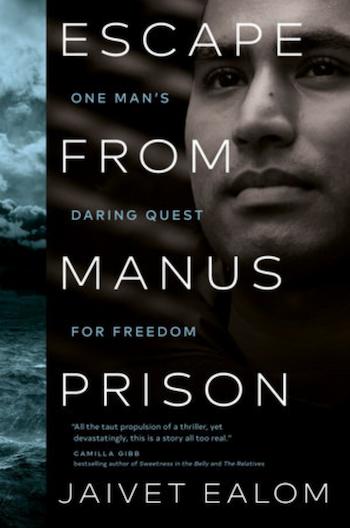
About the Author: Jaivet Ealom was born in Myanmar and now resides in Toronto, where he has become a prominent spokesperson for the Rohingya community. He is a member of the Refugee Advisory Network of Canada and is on the leadership team of the Canadian Rohingya Development Initiative. In his roles as co-founder of the Rohingya Centre of Canada, as well as Northern Lights Canada, he aims to help some of the world’s most vulnerable refugees. Jaivet is studying at the University of Toronto and works for NeedsList, a company that promotes the use of technology to help displaced peoples bypass institutional barriers.
DiscussantsJaivet Ealom's book, Escape From Manus: One Man's Daring Quest for Freedom, is available for purchase at Penguin Random House and Amazon.
Nov. 21 and 22, 2023
A team from the Centre for Research on Security Practices, led by Dr. Tarah Hodgkinson, is hosting a community safety search conference focused on safety in downtown Brantford.
What will this search conference feature?
Are you passionate about safety in downtown Brantford? Do you work and/or live in the downtown? Are you a community safety stakeholder? Then we want to hear from you!
Nov. 27, 2023
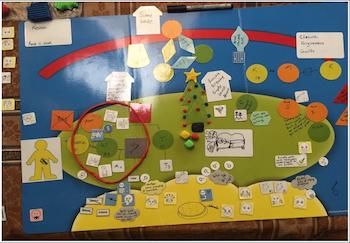
The Vidaview Life Story Board (LSB) method is an innovative interview tool for qualitative research. The LSB introduces visual-spatial, tactile and dialogical modes that transform the interview dynamics and shift the locus of control - to see what participants are talking about and share in a transparent process of dialogue. The method uses a set of cards, markers, and notation on a playboard to create a visual representation of one’s life situation or story. Originally designed for use with war-affected children in Sri Lanka, it has since been used with diverse populations and in a wide range of research and therapeutic applications including humanitarian and conflict settings.
The workshop will provide an overview to the method, case examples, and further resources.

Dr. Ashley Stewart-Tufescu is an Assistant Professor and Registered Social Worker in the Faculty of Social Work. Prior to joining the Faculty in 2021, she was a post-doctoral fellow in the Departments of Community Health Sciences and Psychiatry at the University of Manitoba’s Bannatyne Campus.
While completing her doctoral studies, Dr. Stewart-Tufescu was a faculty member in the Early Childhood Education program in the Faculty of Health Sciences and Community Services at Red River College. During her graduate and post-graduate training she received a number of provincial and national research awards and fellowships including a joint Research Manitoba and Children’s Hospital Research Institute of Manitoba (CHRIM) Post-Doctoral Health Research Fellowship, and a Social Sciences and Humanities Research Council of Canada Doctoral Fellowship. Dr. Stewart-Tufescu’s fellowship training focused on psychiatric epidemiology and childhood adversity by linking survey data to administrative health, education and justice databases. Her doctoral research examined the transportability and efficacy of a violence prevention parenting program in highly diverse country contexts characterized by conflict, trauma, environmental disaster, and resource insecurity. Both of these areas of study are on-going and inform her research endeavours.
Currently, Dr. Stewart-Tufescu’s program of research spans 19 different countries throughout Asia, Latin America, the Middle East, North America, and South East Asia including many under resourced regions. She is a co-investigator and collaborator on numerous research projects supported by the Public Health Agency of Canada, the Social Sciences and Humanities Research Council, and the Canadian Institutes of Health Research. As a Registered Social Worker, Dr. Stewart-Tufescu has direct practice experience in the fields of child welfare and mental health. She continues to work with local community-based organizations to support caregivers in the prevention of child maltreatment and family violence from a trauma-informed approach.
This workshop is provided free of charge thanks to funding from the Graduate Enhancement Fund.
May 12, 2022
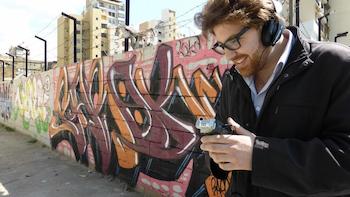
Combining the intimacy of the human voice and personal snapshots with archival images and sounds, digital storytelling serves as a powerful form of expression that situates individual stories within broader social narratives and geopolitical contexts. As such, digital storytelling holds potential not only as a creative practice or pedagogical tool, but also as a participatory research method. Drawing on research with young people in (post)conflict and divided societies -- including in Lebanon, Cyprus, Bosnia-and-Herzegovina, and Palestine -- this talk will discuss the methodological promises, practical pitfalls, and ethical challenges of using digital storytelling as a way of exploring the lives and spaces of young people as well as the attachments they form and the meanings they give to places scarred by conflict.
Hosts
May 18 & 19, 2022
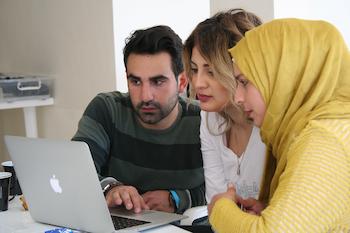
Place-based digital storytelling is a participatory research tool that can be used to examine how stories give meaning to everyday places and how such places give meaning to people's lives. This two-day, hands-on workshop will guide participants through collaborative, place-based digital storytelling processes. This includes eliciting stories through photo-walks and peer or intergenerational interviewing, drafting two-column scripts and crafting storyboards, recording narrative audio and in-situ sound, and editing sounds, images, voice, and video together using digital video editing. In addition, this workshop will discuss ethical considerations as well as options for disseminating stories online and in-person.
Hosts
June 8, 2022
With war raging in places such as Syria, Afghanistan, and Ukraine, there are a record-setting number of people forced to flee their homes. The likelihood of the displaced returning becomes increasingly unlikely because their homes are often destroyed. What are the impacts of loss of home upon families, communities, and societies? If having a home is a fundamental human right, then why is the destruction of home not viewed as a rights violation and punished accordingly?
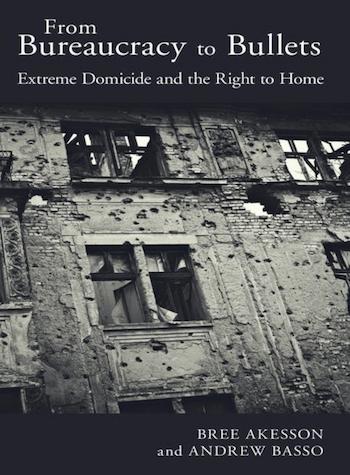
The new book From Bureaucracy to Bullets: Extreme Domicide and the Right to Home, by Dr. Bree Akesson and Dr. Andrew Basso, answers these questions and more by focusing on the violent practice of extreme domicide, or the intentional destruction of the home, as a central and overlooked human rights issue. This event will feature an expert panel discussion exploring the concept of extreme domicide and its applicability to today’s global conflicts.
Panelists
From Bureaucracy to Bullets: Extreme Domicide and the Right to Home, is available for purchase at Rutgers University Press, Indigo, and Amazon.
Sept. 29, 2022
The Centre for Research on Security Practices and the From NIMNY to Neighbour research team hosted a workshop on September 29, 2022, funded in part by the Social Sciences and Humanities Research Council. This workshop was designed to address the challenges facing mid-sized cities and was guided by the following objectives:
Resources from the workshop can be found on the From NIMBY to Neighbour page.
Oct. 18, 2022

In this workshop, we will explore some of the different methodological techniques and approaches that can be applied to understand the causes and consequences of disinformation campaigns and information operations. Informed by several empirical studies from the UK, workshop participants will learn how a blend of qualitative and quantitative techniques can be used to illuminate the ways that distorting and deceptive messages are constructed and communicated to influence public understanding and political decision-making.
Martin Innes is Director of the Crime and Security Research Institute and the Universities' Police Science Institute, and a Professor in the School of Social Sciences at Cardiff University. His work on disinformation, counter-terrorism, neighbourhood policing, signal crimes, and murder investigations have been especially influential across the academic, policy and practice communities in the UK and globally.
Oct. 19, 2022
Disinformation is one of the most pressing and urgent social and political challenges of our times. Almost every high-profile event or issue seems to be acting as a ‘magnet’ for disinformation campaigns and influence operations, ranging from democratic elections, to the coronavirus global health pandemic, and the conduct of war. This talk investigates what we know about how disinformation campaigns are organised and conducted. Informed by a large-scale, international research programme exploring disinformation and its impacts across diverse settings and situations, the talk will use several key ‘real world’ examples to illuminate the key components of how digital disinformation campaigns are run, and what can be done to limit their harms.
Martin Innes is Director of the Crime and Security Research Institute and the Universities' Police Science Institute, and a Professor in the School of Social Sciences at Cardiff University. His work on disinformation, counter-terrorism, neighbourhood policing, signal crimes, and murder investigations have been especially influential across the academic, policy and practice communities in the UK and globally.
Nov. 30, 2022
Networked technologies pose new challenges to privacy and security, not least for young people who often use them for school, work and play. Adults often rely on surveillance to protect young people from harm in this new environment, but 20 years of research consistently demonstrates that there is a significant gap between the problems adults think youth face online and the actual issues they are asking us to help them with. Most notably, they are deeply concerned about the constant surveillance they face – from parents, educators and corporations – and the ways in which the commercialization of online spaces privileges extreme content and outrage. In this lecture, Valerie Steeves provides an overview of young people’s concerns and suggests ways that we, as concerned adults, can advocate for policies that will better protect their privacy and security.
Valerie Steeves is a Full Professor in the Department of Criminology at the University of Ottawa, Canada. Her main area of research focuses on the impact of new technologies on human rights. She is the principal investigator of the eQuality Project, a partnership of researchers, educators, advocates, civil society groups, and policymakers who are interested in examining the impact of online commercial profiling on children’s identities and social relationships. In 2022, she received the Outstanding Achievement Award from the Surveillance Studies Network for her major contribution to the field of surveillance studies.
Dec. 1, 2022
This workshop will explore innovative ways to transfer research knowledge to policymakers and the general public, through films, art workshops, educational modules and deliberative dialogue summits. Specific examples from the eQuality Project will be used to identify the strengths of this approach and the challenges that come with it.
Valerie Steeves is a Full Professor in the Department of Criminology at the University of Ottawa, Canada. Her main area of research focuses on the impact of new technologies on human rights. She is the principal investigator of the eQuality Project, a partnership of researchers, educators, advocates, civil society groups, and policymakers who are interested in examining the impact of online commercial profiling on children’s identities and social relationships. In 2022, she received the Outstanding Achievement Award from the Surveillance Studies Network for her major contribution to the field of surveillance studies.
Feb. 12, 2021
CRSP hosted a virtual book launch and panel discussion for Dr. Erin Dej's book, A Complex Exile: Homelessness and Social Exclusion in Canada (UBC Press). The panel dived into the book's key findings, discussed how social systems reinforce exclusion, and talked about how we can transform our collective imagination around our response to homelessness.
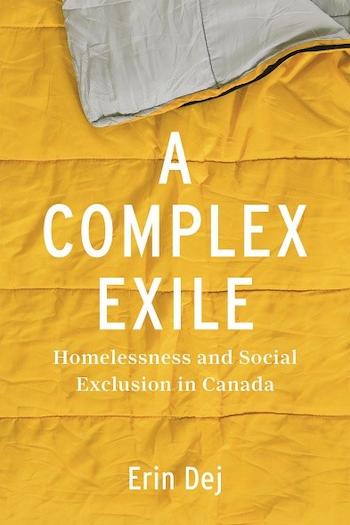
You can watch the book launch and panel discussion.
Guest Speakers
Panelists
Moderator
Feb. 25, 2021
An introduction to making research poster displays and tips for attending and/or presenting at a poster display. Research posters are a staple in many disciplines to communicate your research findings to your academic peers. This presentation taught how to create a poster for an academic poster display and shared some tips for presenting posters.
March 4, 2021
Infographics are visual representations of the key messages of your research. This presentation shared some of the ways you can use infographics, and focus on distilling the key messages that viewers should understand form your infographic.
March 24, 2021
The Centre for Research on Security Practices, Wilfrid Laurier University and the Surveillance Studies Centre, Queens University co-hosted a virtual book launch and panel discussion on the book, Big Data Surveillance and Security Intelligence: The Canadian Case.

In this virtual book launch, chapter contributors and editors shared their research findings, fielded questions and discussed the relevance of their work in the present COVID-19 environment.
Panelists
June 1, 2021
This online workshop provided an introduction to the Brokered Dialogue method, and was presented by its co-inventors, Dr. James Lavery and Dr. Janet Parsons. Brokered Dialogue was initially designed as a film-based social science research method for investigating and addressing controversy or conflict around contentious health and social issues. However, it quickly became apparent that it also has great potential as a social intervention and as a vehicle for knowledge mobilization. And through the ongoing development of Brokered Dialogue method, Janet and James are exploring this potential to serve as a catalyst for transformational social change for a wide range of important issues.
This workshop outlined Brokered Dialogue’s theoretical foundations and its key features. Janet and James also shared their early experiences and applications of the method (past), more recent refinements and lessons learned (present), as well as future development plans for the method.
Presenters
June 22, 2021
Combining images, video, sound, and voice, researchers have long used digital storytelling as a participatory method that enables participants to share their stories and experiences in their own words. While typically deployed as a tool for individual introspection and self-reflection, this talk will introduce participants to how digital storying can be used as a creative, place-based method that draws upon peer and intergenerational interviewing as well as photo walks and sound recording. In doing so, place-based digital storytelling can be used to examine how stories give meaning to everyday places and how such places, in turn, give meaning to people's lives. Combining the intimacy of the human voice and personal snapshots with archival images and sounds, place-based digital storytelling can be a powerful form of expression that situates individual stories within broader social structures and geopolitical processes. In addition to the theoretical background of this method, this workshop will introduce participants to the practical procedures, technical tools, and ethical best practices of this technique. The speakers will share their experiences using this tool with young people in communities that have histories of conflict and division, including in Lebanon, Cyprus, Bosnia-and-Herzegovina, and Palestine.
Nov. 24, 2021
This training session was oriented toward those who are new to using NVivo software. The session was aimed at familiarizing participants with basic functions in NVivo. Participants were taught how to set up files, import data files, code and autocode qualitative data, and organize coded data.
Dec. 1, 2021

In this workshop, participants learned about different approaches to arts-based research and research-creation, and how they might work with these methodologies in research practice. Drawing on contemporary case studies from a variety of disciplines, participants were given a chance to workshop their own ideas and develop goals and objectives to further their research inquiry
Dec. 7, 2021

Academics are trained to identify, analyze, assess, and (sometimes) propose solutions to challenges facing society. Less commonly are they also taught methods or techniques to communicate their findings to relevant policy communities. In this workshop, we discussed who creates briefs and why, and which styles are more or less successful based on the goals of the author(s). We also focused in on how to craft impact-seeking policy documents for different audiences, where and how to submit them for maximum effect, as well as what to prepare for ahead of publishing or presenting a brief or policy position to external stakeholders or the media.
Dec. 8, 2021
This 3-hour workshop was an introduction to the ‘game jam’ as a participatory and arts-based research methodology. A game jam is a social event where any group of community stakeholders (i.e., professional and non-professional artists, designers, hobbyists, makers, and others) come together to co-design, collaborate, and playfully explore a topic or problem using the tools of game making, storytelling, and art practice. This workshop introduced participants to Twine—an open-source tool for creating interactive narratives; as well as approaches and methods for engaging communities and collecting and analyzing data using this game jam methodology. As improvisational and performative spaces for divergent thinking, game jams inspire novel ideas and new ways of doing engaged research that transcend traditional methodological toolboxes.
Feb. 6, 2020

In this talk Kyriakides will present the analytical framework of status eligibilities, explaining how the framework emerged from research pertaining to refugee-host relations. He will elaborate on how the conceptual components of the framework – the eligibility to exist and authority to act – emerge in everyday interactions between ‘refugees’ and ‘hosts’ to reveal how the particularities of racialization affect refugee reception.
Kyriakides is principally engaged in an in-depth analysis of 'reception contexts' through the application of mixed-methods (including institutional, political, urban and communication/cyber ethnography) to the study of the relationship between geo-politics, public policy related to (anti)immigration and (anti)racism, and the neighborhood negotiation of racialization, nationalism and religious conflict. Kyriakides' work favors a comparative approach 'between groups' and 'between reception contexts'. His work has focused on Europe, North America and the Middle East.
Feb. 24, 2020
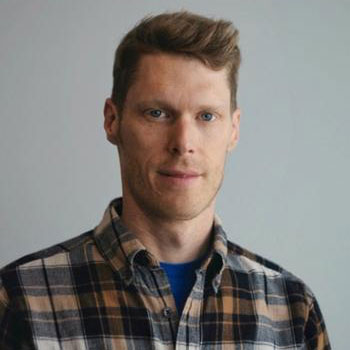
At first glance linking policy to research is straightforward. However, effectively translating research findings into policy-ready documents comes with challenges. In this presentation, Dr. Adam Molnar discussed his experience crafting findings from security and privacy research into documents for policy makers. In doing so, Dr. Molnar reviewed some of the key facilitators and barriers (e.g., relationship building, knowledge translation, and time management) that shape how knowledge can be mobilized for diverse policy communities.
Oct. 28, 2020
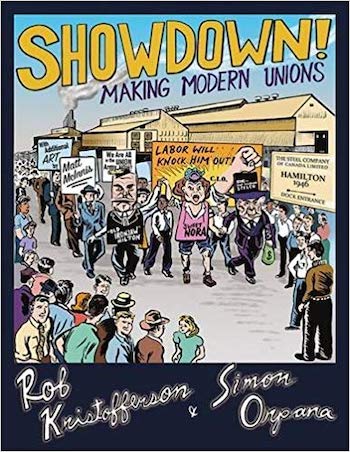
Researchers have begun to use graphic novels to communicate their research findings. Are you curious about how researchers create these graphic novels? Have you ever wondered how researchers go from raw data such as archival materials and interviews to the images and text we see in graphic novels? If so, you’ll be interested in Professor Rob Kristofferson’s talk in which he will dicsuss how he, and co-author Simon Orpana, created their recent graphic novel, Showdown! Making Modern Unions.
Nov. 6, 2020
NVivo Software Workshop Part I
CRSP and the Tshepo Institute for the Study of Contemporary Africa hosted a jointly-sponsored qualitative data analysis training session. This training session was oriented toward those who are new to using NVivo software. The session was aimed at familiarizing participants with basic functions in NVivo. Participants were taught how to set up files, import data files, code and autocode qualitative data, and organize coded data.
Dec. 9, 2020
NVivo Software Workshop Part I
CRSP and the Tshepo Institute for the Study of Contemporary Africa hosted a jointly-sponsored qualitative data analysis training session. This training session was oriented toward individuals who have some basic familiarity with using NVivo. The session was aimed at instructing participants in coding, using different types of queries (e.g., text searches, word frequency, coding comparisons), and creating, linking, and using memos.
Dec. 4, 2019
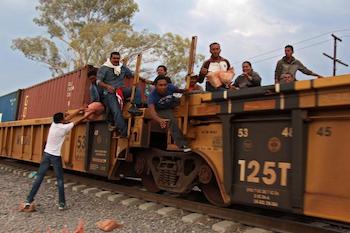
With international asylum policies increasingly framed by a security paradigm as opposed to a framework of human rights, forced migrants often spend very long periods in countries of transit. In the past, crossing Mexico from its southern border with Guatemala to its northern border with the United States was a linear process, largely via a freight train known as “la Bestia” [the Beast]. Conducting research with these vulnerable people was a matter of following Mexico’s “humanitarian corridor” of shelters along the rail lines. More recently, the journey through Mexican territory has become fragmented with migrants attempting clandestine journeys through longer, more dangerous routes with the help of people smugglers.
During her talk Stacey will present her experiences researching Central American and African migrants in transit and applying for asylum in Mexico. She will discuss research methods in the field, highlighting in particular the challenges of participant recruitment and data collection, as well as the ethics and security concerns involved in conducting research in an increasingly volatile and dangerous setting.
Tarah Hodgkinson, Director
James Popham, Associate Director
Molly Phillips, Project Coordinator